When ChatGPT launched in late 2022, it did something remarkable: it made ordinary people genuinely excited about software. Within months, it had reshaped how the world thought about search, writing, and productivity. For two years, OpenAI's product wasn't just the market leader. It was the market.
That era is ending, and UK businesses that haven't noticed yet are already behind.
ChatGPT isn't dying. It still has over 900 million weekly active users globally. But for the first time, the numbers are moving in the wrong direction. Rivals aren't just catching up. In some areas, they've already overtaken it. And the reasons users are leaving go well beyond product features.
The Numbers
In January 2025, ChatGPT held an 86.7% share of AI chatbot web traffic worldwide. By April 2026, that's dropped to somewhere between 57% and 64% depending on the source. The methodology variance matters less than the direction: every credible data firm agrees ChatGPT is losing ground fast.
So where are those users going? Google Gemini has been the biggest winner, climbing from 14.7% to 25.2% mobile market share globally. Claude nearly tripled its web traffic share in a single month in early 2026. And Grok, Elon Musk's xAI product, went from 1.6% to 15.2% US mobile share in twelve months, even amid an ongoing scandal and regulatory scrutiny across multiple countries, including the UK.
The story isn't that people are quitting AI. They're distributing it.
Why People Are Looking Elsewhere
The product has frustrated its biggest fans
The most consistent complaint from power users is that ChatGPT got worse. When OpenAI launched GPT-5 in August 2025 by swapping multiple model options for a single release, the backlash was immediate. Users who'd relied on GPT-4o were automatically moved to something that felt colder and more robotic.
It hasn't recovered. A safety update in March 2026 designed to reduce hallucinations appears to have overcorrected. Sentiment analysis of r/ChatGPT showed a 40% spike in complaints about tone and excessive refusals between March and April alone. The community coined a term for it: "scolding", the model treating normal prompts as suspect. When strong alternatives exist at similar price points, that friction sends users elsewhere fast.
Trust is eroding, and UK users have specific reasons to care
The movement to leave ChatGPT, which picked up momentum in early 2026, reflects something deeper than product frustration. OpenAI's expanding defence contracts and its drift from nonprofit research lab to commercial tech company have alienated users.
Privacy is another pressure point in the UK. OpenAI's default policy allows conversations to be used for model training unless users actively opt out. For businesses operating under UK GDPR, that default is increasingly difficult to accept -- especially given the ICO's active focus on how AI platforms handle personal data. The regulator's 2025/2026 action plan specifically targets foundation model developers over training data practices. Any UK business pasting client information into an AI tool with opt-in data training should be thinking carefully about this.
Who's Winning and Why
The competitors gaining ground aren't just cheaper ChatGPT. Each has found a distinct position.
Gemini wins on ecosystem. If your team is already in Google Workspace, and a significant chunk of UK businesses are, Gemini isn't really an alternative, it's just an extension of what you're already doing. For UK organisations running Google-first environments, the switching cost is almost zero.
Claude has become the tool of choice for developers and knowledge workers. Apptopia data puts Claude ahead of every competitor for average time spent per daily active user at 34.7 minutes, deep engagement rather than casual drop-ins. Claude Code, bundled into the Pro plan, has become the go-to for complex coding work.
Perplexity owns research. Every answer comes with citations, making it the obvious choice for anyone who needs to verify what they're reading rather than just receive it. For UK agencies, consultancies, and newsrooms where accuracy and sourcing matter, it's filling a gap ChatGPT never quite managed.
Grok is the wildcard. Its X integration gives it real-time social data others lack, and its percentage growth has been extraordinary. Whether that reflects genuine product quality or controversy-fuelled curiosity is still an open question, and the ongoing regulatory scrutiny it faces in several European jurisdictions adds another layer of uncertainty for UK business users considering it.
Not a Migration. A Maturation.
It's tempting to frame this as "the fall of ChatGPT." That's the wrong read.
What's actually happening mirrors the social media fragmentation of a decade ago. In 2012, Facebook dominated completely. The brands that spotted early that Instagram and Snapchat were carving out distinct audiences, and adapted their strategies, built real advantages. The ones that waited paid a premium to catch up.
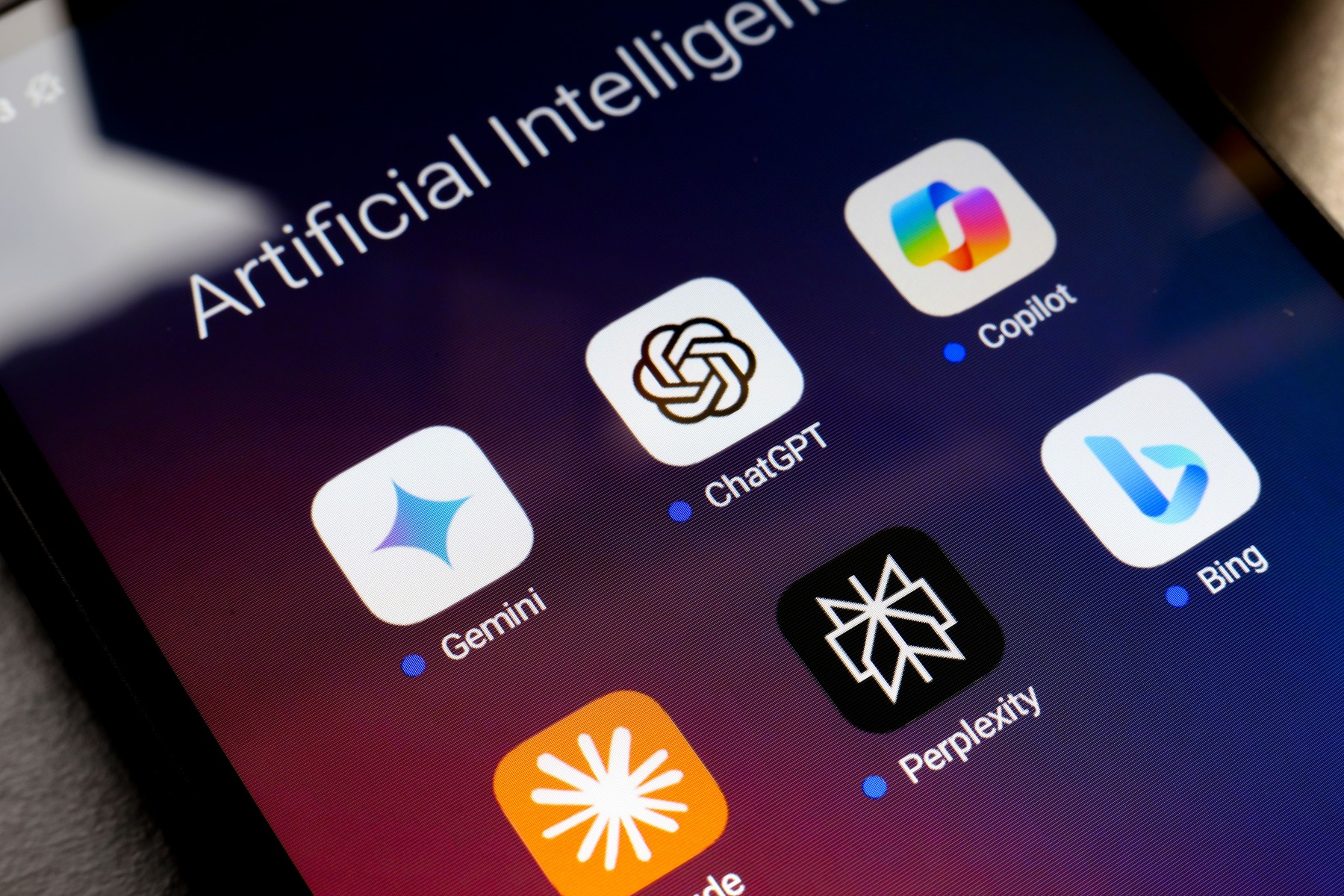
AI is at that same point now. Multi-tool usage has become standard among heavy users; Claude for deep work, Gemini for quick lookups, Perplexity for anything that needs citing. These aren't substitutes for each other. They're tools chosen by task.
For UK businesses, this maturation is happening against a specific backdrop. The British Chambers of Commerce found 54% of UK firms are actively using AI as of early 2026, up from 25% in 2024. But adoption depth varies enormously. Most are still at surface level, a ChatGPT subscription here, a Copilot licence there, without structured workflows or training behind it. The firms that move beyond single-tool dependency now are the ones that will have genuinely competitive AI capability in twelve months.
The Bottom Line
ChatGPT's era of dominance is over. That doesn't make it irrelevant, 900 million weekly users isn't nothing, but the assumption that "AI" and "ChatGPT" are interchangeable is no longer accurate. It wasn't accurate in the US six months ago. It's not accurate in the UK today.
The reshuffle is underway. The question is whether you're watching it or ahead of it.